An unusual eco-friendly stay combines atypical accommodation (cabin, eco-lodge, bubble, yurt) with verifiable practices to reduce environmental impact: water management, renewable energy, bio-sourced materials, short supply chains. In France, this type of stay in nature relies on a network of independent hosts spread across rural or forested areas, far from standardized tourist circuits.
Environmental Criteria for Nature Accommodations in France
The term “eco-friendly” is used by nearly all booking platforms, but its meaning varies significantly from one host to another. Distinguishing a genuine commitment from a mere marketing argument requires verifying concrete elements.
The Atout France ranking system, applicable since April 1, 2022, has strengthened its “sustainable development” component. The criteria focus on water, energy, waste, and short supply chain management. This ranking remains voluntary and must be renewed every five years, meaning that an accommodation ranked four years ago may have relaxed its practices without losing its star.
Beyond the official ranking, several points allow for evaluating a place’s approach before booking:
- The energy source: solar panels, connection to the grid, or generator. A “disconnected” cabin powered by a diesel generator is not eco-friendly.
- The treatment of wastewater: phytodepuration, dry toilets, or connection to the sewer system. Phytodepuration is common in isolated eco-lodges and represents a significant investment from the host.
- The origin of construction materials: local wood, hemp, raw earth. An accommodation made of wood imported from another continent loses some of its ecological coherence.
- Food partnerships: breakfast with products from nearby farms or sourcing through a traditional wholesaler.
Specialized platforms like terresdenvies.com list hosts committed to these approaches, facilitating direct connections with local producers and stakeholders.
Cabins, Eco-lodges, Bubbles: Which Unusual Accommodation for Which Use
Not all unusual accommodations are equal in terms of comfort, insulation, or seasonality. Choosing the right format depends on the context of the stay: couple, family with children, group of friends, season.
The Treehouse or Forest Cabin
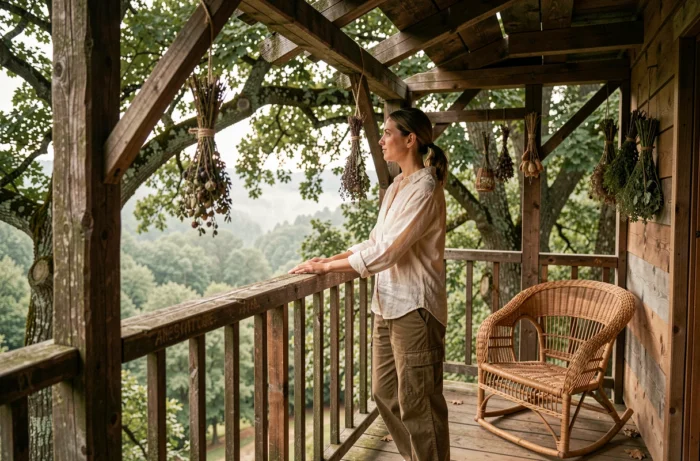
This is the most common format in France, with a dense network in regions like Puisaye, Vercors, or the Breton forests. A well-designed cabin offers sufficient insulation for three-season stays (spring, summer, autumn). In winter, the frequent absence of central heating limits its use to those who enjoy cool nights under a thick duvet.
Cabins usually accommodate two to four people. For families, checking for suitable guardrails and accessibility (ladder, stairs, walkway) remains a useful reflex.
The Eco-lodge
The term refers to a lightweight structure, often made of wood and natural materials, integrated into a preserved environment. Unlike a cabin, the eco-lodge typically offers a private bathroom and a level of comfort close to that of a guest room. It is the most suitable format for nature stays with young children, thanks to the floor space and sanitary facilities.
The Transparent Bubble
Designed for stargazing, the bubble offers a unique visual experience but comes with constraints: rapid overheating in summer, condensation in mid-season, lack of visual privacy in some cases. This format is better suited for occasional nights as a couple than for extended vacations.
Adapting Your Stay to Recent Climate Constraints
The eco-friendly offer in nature can no longer ignore extreme weather events. A documented feedback in September 2025 regarding the Le Dek hotel in Finistère illustrates this reality well: the establishment temporarily closed its Japanese bath to reduce water consumption during a heatwave. Such adjustments are becoming common among committed hosts.
For travelers, this means planning for a certain degree of flexibility. A stay in an eco-lodge in Puisaye or Provence during a drought may mean limited shower durations, bans on campfires, or the temporary closure of certain outdoor activities.
This adaptation is not a flaw. It precisely distinguishes sincere hosts from those who maintain their services at any cost, to the detriment of local resources. A host who reduces their services in the face of an environmental constraint proves their commitment better than a label.
Funding and Viability of Sustainable Accommodation Projects
Project leaders for unusual eco-friendly accommodations must navigate a changing financial context. The ADEME’s Sustainable Tourism Fund, which supported hosts and restaurateurs from 2021 to 2024, is indicated as closed in 2026. Venue creators can no longer rely on this national scheme to finance their installations.
This disappearance of public aid dedicated to sustainable tourism has a direct consequence on pricing. Hosts who invest in bio-sourced materials, autonomous energy systems, or phytodepuration pass these costs onto the price of the night. A higher price often reflects a real environmental investment, not just a premium for “green marketing.”
Recent tourist attendance is also evolving in a contrasting manner: growth relies more on foreign visitors, while French clientele is declining in certain segments. Unusual hosts in rural areas, whose clientele remains predominantly French, feel this trend and adjust their offers (short stays, activity-inclusive packages, opening in low season).
Ultimately, choosing an unusual eco-friendly stay in France comes down to accepting a conscious compromise: fewer standardized services, more coherence between the place, its environment, and the available resources. French nature destinations, from Puisaye to Finistère, offer this framework as long as you verify what lies behind the label.