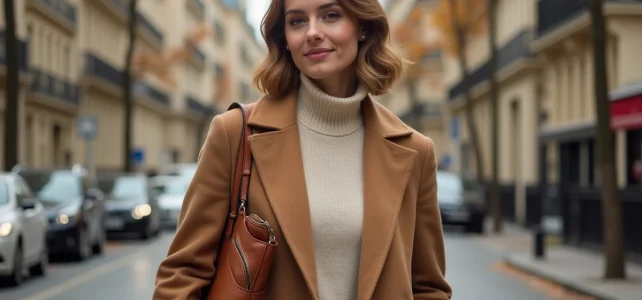
Every morning, the same situation: you open the wardrobe, grab the same three pieces, and the result looks just like yesterday. Affirming your style every day doesn’t require renewing your entire wardrobe each season. It involves making some concrete choices about the clothes you keep, those you mix differently, and the fashion trends you truly decide to adopt.
Building a capsule wardrobe that lasts the whole season
The logic of “less but better” works as long as it’s not turned into a rigid minimalist exercise. We start from a concrete need: how many different outfits are needed to cover a week without repeating the same look two days in a row?
The answer lies in about fifteen well-chosen pieces. A pair of fluid fabric trousers, a raw denim jean, a midi skirt, two or three tops in neutral colors, and two more statement pieces are enough to create varied outfits. The idea is that each piece can be combined with at least three others from the wardrobe.
On the Mamzelle H fashion site, you can find selections that work exactly on this principle: clothes designed to pair with each other rather than to shine alone. It’s the difference between accumulating favorites and building a coherent wardrobe.
The classic trap is buying a trendy piece without checking if it goes with what you already own. Before any purchase, mentally test it with three existing outfits. If it doesn’t work, you pass.
Colors and combinations: the three-tone method per outfit
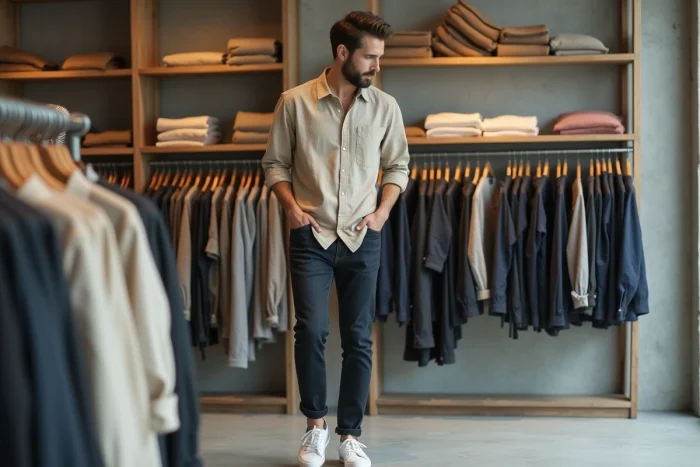
Wearing more than three colors in the same outfit rarely yields a controlled result. The simplest rule for a structured everyday look is to limit each outfit to a maximum of three shades, including accessories.
Neutral palette and accent piece
Start with two sober colors (black, off-white, beige, gray, navy), then add one brighter color or a pattern. This season, pastel tones are regularly appearing in collections: almond green, powder pink, sky blue. They easily integrate without throwing off the outfit’s balance.
For example, beige trousers, a white top, and an aqua blazer create an office look that also works for a terrace after work. You’ve only changed one piece from a classic ensemble, and the result looks more polished.
Playing with materials rather than colors
When wearing a monochrome look or a tonal outfit (one color), it’s the mix of textures that creates depth. A thick knit sweater with satin trousers, or a linen shirt with a leather skirt: the contrast of materials replaces the contrast of colors.
Feedback on this point varies depending on body types and contexts, but the principle remains effective: in case of doubt about a color combination, focus on textures.
Fashion accessories: investing in three categories that change a look
You don’t need ten belts and twenty necklaces. Three categories of accessories produce an immediate visible effect on a basic outfit:
- Structuring shoes (a pair of square-toed ankle boots, loafers, a pair of clean white sneakers) define the tone of the outfit more than any other element
- A medium-sized bag in a color that contrasts with the usual palette is enough to elevate a neutral look without extra effort
- A visible belt, worn over a blazer or a flowy dress, reshapes the silhouette and adds a style intention where there was none
The most cost-effective accessory in terms of style remains the shoe. Changing the pair transforms the tone of an entire outfit: the same midi dress goes from casual with sneakers to chic with low-heeled mules.
Adapting fashion trends to your body type without following everything
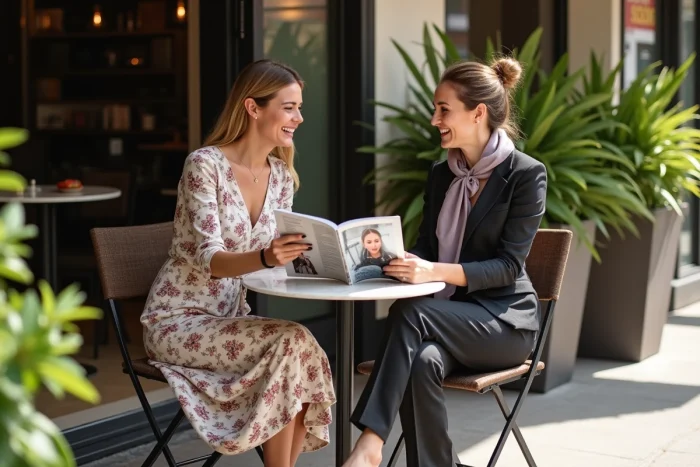
Each season brings key silhouettes. This year, we see a lot of oversized cuts, defined waists, and long skirts. Not everything suits everyone, and that’s normal.
The practical approach is to test one trend at a time, on the part of the body where you feel most comfortable. If you prefer to highlight the top, try a structured shoulder top with a simple bottom. If you like your legs, try a split midi skirt with a fitted top.
Trendy pieces with high daily potential
Some pieces transcend seasons because they adapt to various styles:
- The shirt dress, wearable open as a light jacket or buttoned as a dress, works from the office to the weekend
- The oversized blazer in linen or cotton, which structures an outfit without making it rigid, remains a durable purchase
- The high-waisted wide-leg trousers, which suit most body types and pair well with both a crop top and a tucked-in shirt
Adopting a trend does not mean wearing the complete runway look. You extract one piece or detail (a cut, a color, a pattern) and integrate it into your own combinations.
Clothing care and rotation: the forgotten lever of style
A wrinkled, pilled, or misshapen garment cancels out all the effect of a well-thought-out outfit. Before looking for new pieces, check the condition of what you already own.
The seasonal review takes an hour. Take everything out, sort what’s damaged, what no longer fits, and what hasn’t been worn in two seasons. The pieces you keep should be in a condition to be worn tomorrow morning.
A steam iron and a lint remover can give a new look to clothes you were ready to throw away. Occasional dry cleaning on structured pieces (blazers, coats) extends their lifespan by several seasons.
The European regulation ESPR, which came into effect in 2024, is pushing brands towards more sustainable textile design. We are starting to see clothes designed to last, with more durable fibers and reinforced finishes. Considering the quality of manufacturing at the time of purchase is also affirming a style that doesn’t collapse after the third wash.