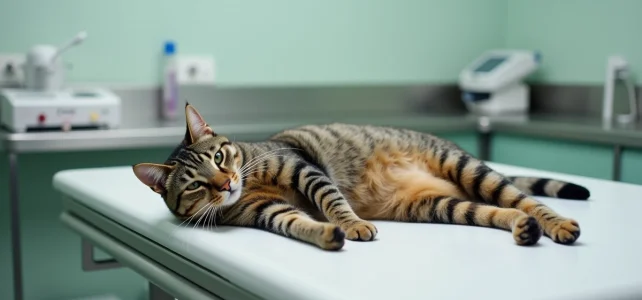
Your cat lies on its side and its abdomen looks rounder than usual. When you run your hand over its belly, it tenses up or tries to escape. A swollen belly in a cat is never trivial: behind this visible sign lie very different causes, some benign, others requiring prompt attention.
Swollen abdomen in cats: what palpation doesn’t reveal
Have you noticed that your cat’s belly seems firmer or tenser after a meal? This sensation may be temporary. However, an abdomen that remains distended for several hours indicates something more than just slow digestion.
See also : How to Develop Your Initiative to Succeed in 2025 and Beyond
The difficulty lies in the location of the problem. A swelling located low, near the bladder, does not have the same significance as a uniformly round abdomen. In the first case, urinary retention may be involved, a situation that is urgent. In the second, it leans more towards an accumulation of gas, fluid, or fecal matter.
A common trap is to confuse an overweight cat with a cat that has a swollen belly. An obese cat has excess fat distributed over its entire body, including the neck and flanks. A swollen belly in isolation, without general weight gain, is a warning signal. This distinction guides the next steps.
Read also : How to Successfully Launch and Grow Your Online Business in 2024
To better understand the symptoms of a swollen belly in cats, you need to observe the signs that accompany this abdominal swelling: changes in behavior, alterations in bowel movements, decreased appetite.
Intestinal parasites in kittens: the most underestimated cause
In a kitten, a bloated belly takes on a particular dimension. Intestinal parasites are among the leading causes of abdominal swelling in young cats, and this diagnosis is often made too late.
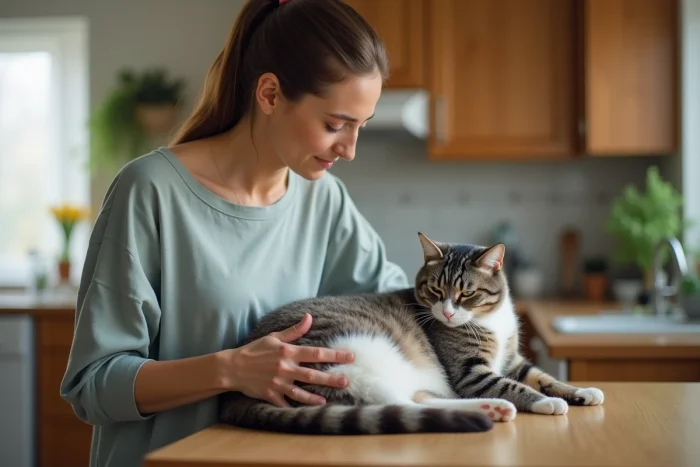
An infested kitten does not always show visible worms in its stools. The warning signs are more discreet:
- Intermittent vomiting associated with brief episodes of diarrhea that recur over several days
- A dull and dry coat despite a proper diet, indicating poor nutrient absorption
- An appetite that seems normal or even increased, but without weight gain, as the parasites absorb part of the intake
- A visibly distended abdomen, firm to the touch, contrasting with a thin body
A kitten with a swollen belly requires prompt veterinary consultation. Parasitic infestation can lead to severe dehydration within days in a small animal. The veterinarian performs a stool analysis (coproscopy) to identify the type of parasite before prescribing an appropriate dewormer.
Prevention relies on a often overlooked point: deworming should follow a protocol defined by the veterinarian, not a generic schedule that applies to all cats. An indoor cat and a cat with outdoor access do not face the same risks. Antiparasitic treatment against fleas and ticks is also part of the overall strategy, as fleas can transmit certain intestinal worms.
Abdominal swelling in adult cats: three avenues to explore
In an adult cat, the diagnosis becomes more complicated. Several pathologies can cause a distended abdomen, and their severity varies significantly.
Chronic constipation and inappropriate diet
A cat that hasn’t used the litter box for two days or more accumulates matter in the colon. Its belly gradually hardens. A diet low in fiber and a lack of hydration are the most common triggers. Cats fed exclusively on dry kibble without sufficient access to water are particularly at risk.
Before changing the diet, check a simple detail: the location and cleanliness of the water bowl. A cat drinks more when the water is fresh, away from its food and litter box.
Feline infectious peritonitis (FIP)
FIP remains one of the most feared diseases. In its wet form, it causes fluid accumulation in the abdomen, giving the cat a very swollen belly, almost disproportionate to the rest of the body. The cat loses weight, remains lethargic, and refuses to eat.
Wet FIP causes visible and rapid abdominal effusion. Diagnosis requires blood tests and sometimes an abdominal fluid tap. This is a situation that allows for no delay.
Kidney or liver problems
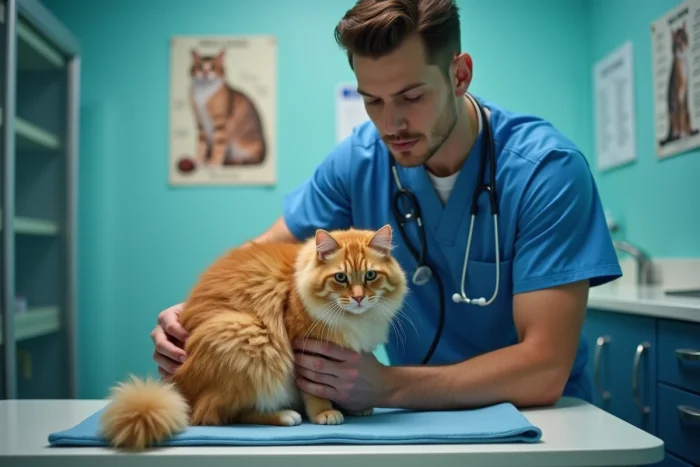
Malfunctioning kidneys or a struggling liver can lead to fluid retention in the abdominal cavity (ascites). The swelling develops gradually over several weeks. The cat drinks more than usual, urinates more, or conversely, much less.
These pathologies are more common in older cats. A blood test and an abdominal ultrasound allow the veterinarian to make an accurate diagnosis.
When to seek emergency care for a swollen belly in cats
Not all swollen bellies are emergencies, but certain signals necessitate a veterinary visit within hours:
- The cat hasn’t eaten for more than 24 hours and its abdomen is tense
- It attempts to urinate without success, repeatedly positioning itself in the litter box (suspected urinary obstruction)
- The swelling appeared suddenly, within hours, accompanied by whimpering or a curled-up posture
- Repeated vomiting accompanies the swelling, which may indicate an intestinal blockage
A sudden swelling associated with vomiting or an inability to urinate constitutes an emergency. Do not attempt to massage the abdomen or administer a laxative without veterinary advice: in the case of obstruction, this could worsen the situation.
The most reliable reflex remains regular observation. A cat you know well will give you clues through its behavior even before the swelling becomes evident. A change in litter box habits, unusual withdrawal, or refusal to let you touch its belly always deserves your attention.