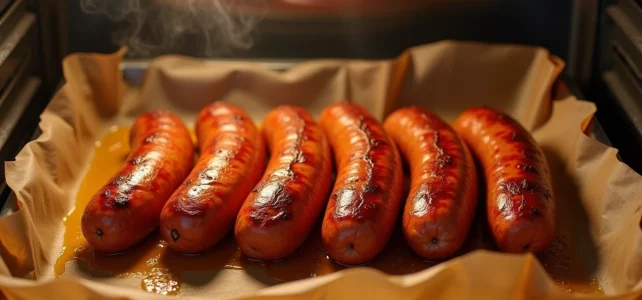
Baking merguez sausages in the oven is appealing due to its simplicity, but the results often disappoint. Chewy skin, dry meat, and a dish swimming in grease: there are many pitfalls when one simply bakes without a method. Cooking merguez in the oven to achieve a tender and juicy texture relies on a few precise parameters, starting with a rarely discussed point in classic recipes: food safety related to the internal temperature of the sausage.
Internal Temperature of Merguez: The Forgotten Sanitary Parameter
Most cooking guides focus on visual aspects (golden color, skin that cracks) to judge if a merguez is ready. This approach poses a real problem. Merguez is a sausage made from minced meat, a category for which Anses recommends a well-cooked core to limit risks associated with pathogens like salmonella or E. coli.
In the oven, the enveloping heat allows for more consistent control than on the barbecue or in a pan. However, a merguez that is golden on the surface may remain undercooked in the center if the oven temperature is too high. The skin colors quickly, but the core has not followed.
A probe thermometer remains the most reliable tool to check internal cooking. Insert it into the center of the thickest sausage in the batch. When the probe indicates sufficient heat at the core, the merguez is both safe and still juicy, provided you do not extend beyond that. The challenge is to learn how to cook merguez in the oven without drying them out while reaching this sanitary threshold.
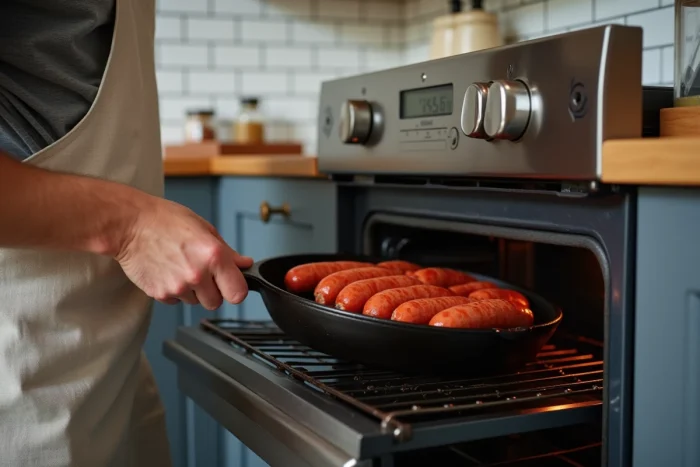
Industrial Merguez with Reduced Fat Content: How Oven Cooking Changes
In recent years, several brands of processed meats in supermarkets have reformulated their merguez to lower salt and fat content. This evolution, motivated by public health recommendations, has a direct effect on the behavior of the sausage in the oven.
A merguez that contains less fat releases less juice during cooking. The bottom of the dish remains drier, and the meat loses its tenderness more quickly if the necessary cooking time is exceeded. Recipes calibrated for traditional merguez (fattier, more tolerant of prolonged cooking) can lead to a dry result with these new formulations.
Adapting the Method to the Product You Buy
Read the ingredients on the packaging. The less fat a merguez contains, the shorter and more monitored the cooking should be. If you opt for artisanal merguez with a classic fat content, the margin for error on cooking time is wider. This is a variable that most online recipes do not mention, yet it conditions the final result.
Cooking Merguez in the Oven: Settings and Important Steps
The oven provides even heat, but you still need to choose the right mode and prepare the dish properly. Two mistakes are consistently made: an oven that is too hot and overcrowded merguez.
Convection or Natural Heat
Convection heat dries out the ambient air in the oven more. For merguez, this mode accelerates the drying of the skin. If your oven allows it, prefer natural convection with top and bottom heating elements, slightly reducing the temperature compared to standard guidelines. Cooking takes a few more minutes, but the skin remains flexible and the meat retains its juice.
Spacing on the Tray
Space the merguez at least two centimeters apart. Sausages stuck together create steam between them, preventing the skin from browning and resulting in a soft texture. Turning them halfway through cooking is still useful for achieving even coloring.
- Place a sheet of parchment paper or a light film of oil on the rack to prevent the skin from sticking.
- Slide a dish with a bit of water under the rack: the steam generated limits drying without compromising the crispiness on the surface.
- Never pierce the skin before or during cooking, or you risk losing the juice that keeps the texture tender.
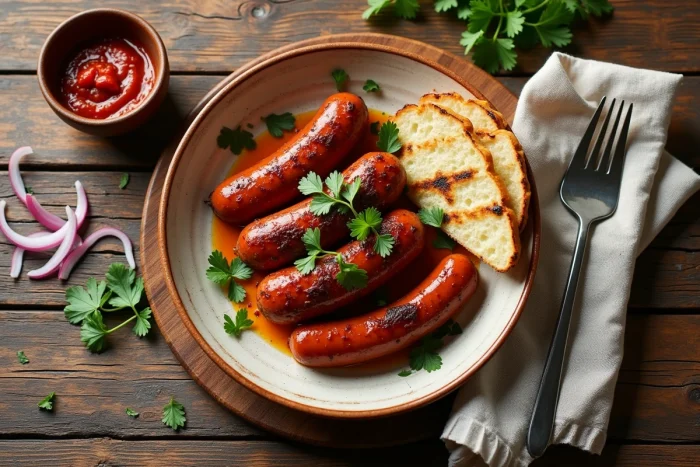
Crispy Surface, Tender Center: The Question of Resting
Resting time is often discussed for roasted meats, but rarely for sausages. However, resting after cooking is not trivial for a merguez. When you take the tray out of the oven, the internal juices are concentrated in the center of the sausage due to pressure. If you cut or bite immediately, this juice flows onto the plate instead of staying in the meat.
Let the merguez rest for a few minutes on the rack, out of the oven, covered with a sheet of aluminum foil. This time allows the fibers to relax and the juice to redistribute. The difference in texture between a merguez served immediately and one that has rested is noticeable, especially with low-fat products.
Finishing Under the Broiler for Crispiness
If you want a truly crispy skin, an effective trick is to cook first in classic mode, then place under the broiler for the last two minutes. This two-step method gives a thin and crunchy skin without compromising the tenderness inside. Watch closely: under the broiler, the merguez can go from golden to burnt in a matter of seconds.
- Use classic cooking mode for most of the time, broil only for finishing.
- Stay in front of the oven during the broil phase, with the door slightly open if your appliance allows it.
- Turn the merguez just before activating the broiler to expose the less colored side.
Cooking merguez in the oven does not require elaborate techniques, but real attention to detail. Product composition, heating mode, spacing on the tray, resting time: each parameter impacts the result. Reformulated merguez with less fat are less forgiving of approximations, and checking the internal temperature remains the only reliable indicator to reconcile food safety and juicy texture.